Gisborne sits on soft marine sediments and young alluvial plains, where the subgrade can turn to mush after a week of rain on the Poverty Bay flats. The laboratory CBR test tells you what that soil can carry before you pour stone or asphalt. We run soaked CBRs as standard — because if a pavement is going to fail here, it will fail wet. Samples come in from Waipaoa loams, weathered papa mudstone, and the loose pumice sands out toward Wainui. Our team follows grain-size testing to confirm the fines content, and when the CBR comes back below 3% we typically pair the result with lime or cement stabilisation trials to model the improvement curve. If you are designing a subdivision accessway or a forestry road inland from Te Karaka, getting the soaked CBR right in the lab saves tens of thousands in over-excavation later.
A soaked CBR of 3% versus 6% can change your pavement thickness by 150 mm — and in Gisborne clay, that difference is often just a few percent of moisture content.
Technical details of the service in Gisborne
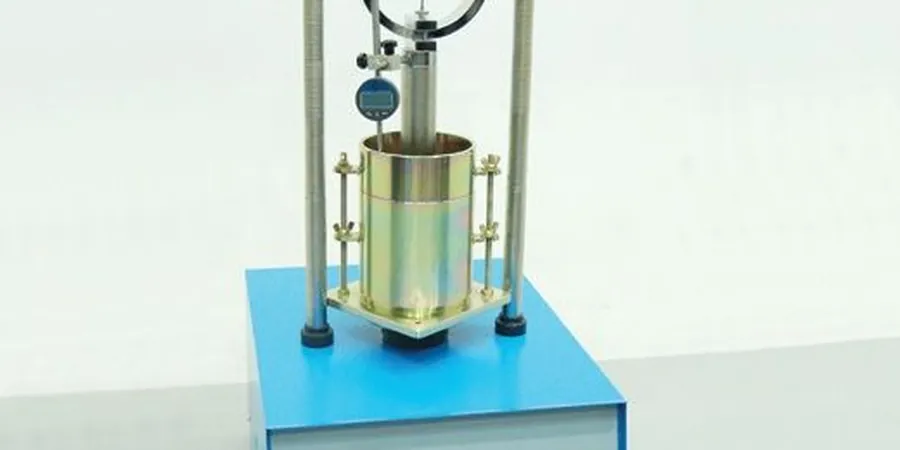
Local geotechnical conditions in Gisborne
If a soaked CBR test on Gisborne subgrade returns less than 3 percent and nobody flags it, the pavement will rut within the first wet season — I have seen it on collector roads out by the airport where the design assumed a CBR of 5 but the actual soaked value was under 2. The cost to dig out and replace failed subgrade mid-project is brutal. Another risk is testing unsoaked. A dry CBR from a summer sample can look fantastic, but once the winter groundwater rises under the formation, you lose most of that strength. We strongly recommend running the full soaked procedure on any cohesive soil east of the Raukumara Range. For granular pumice materials, the risk is different: they can collapse on saturation, so the compaction curve and the CBR must be interpreted together, not in isolation.
Our services
The CBR is rarely run alone — it sits within a suite of tests that together define the pavement foundation. These are the three services we combine most often for Gisborne roading projects.
Soaked laboratory CBR (NZS 4404)
Full 96-hour soak under surcharge, penetration at 2.5 and 5.0 mm, swelling log, and CBR reported at three compaction levels. Suitable for NZTA and council roading submissions.
CBR plus Proctor compaction
Paired test package: standard or heavy Proctor to establish MDD and OMC, then CBR on specimens compacted at 95%, 98%, and 100% of MDD. Delivers the moisture-strength curve for pavement design.
Stabilised subgrade CBR
CBR on lime-, cement-, or polymer-stabilised samples after a prescribed curing period. Used to prove a subgrade improvement design before the contractor mobilises the stabiliser spreader.
Frequently asked questions
How much does a laboratory CBR test cost in Gisborne?
A single-point soaked CBR typically runs between NZ$210 and NZ$280. The full three-point CBR curve with Proctor compaction is usually NZ$320 to NZ$400, depending on the number of specimens and whether swelling measurements are required. If you need stabilised CBR with a curing period, add about NZ$80–100 per point for materials and extended lab time. We quote firm once we know the material type and the design brief.
How long does a soaked CBR take from sample drop-off to report?
Standard turnaround is five working days. The 96-hour soak drives the timeline. If you drop off on Monday morning, you will typically have the report by the following Monday. Expedited service — three working days — is available during summer if you book the slot in advance, but it carries a small surcharge.
Can you test granular and cohesive soils with the same CBR procedure?
Yes, but the sample preparation differs. Granular materials like river gravels or pumice sands are compacted in a 152 mm diameter mould with modified Proctor energy. Cohesive soils — the silty clays common around Gisborne — go into a 152 mm mould at standard Proctor energy, and we pay close attention to swelling during the soak. The lab report will specify which compaction method was used per NZS 4402.
What CBR value do I need for a residential driveway in Gisborne?
Most council consent conditions for residential driveways and shared accessways in Gisborne require a minimum soaked CBR of 5% on the subgrade, tested per NZS 4404. If the natural ground tests below that, you will likely need either a thicker aggregate basecourse or subgrade stabilisation. For heavy-vehicle access on lifestyle blocks, aim for 7% minimum.