The ground conditions shift dramatically as you move from the loess-covered hills around Whataupoko to the deeper alluvial silts near the Taruheru River. In one neighbourhood, a weathered Pleistocene volcanic ash provides a stiff bearing stratum; less than two kilometres away, liquefiable sands left by the Poverty Bay floodplain demand a completely different foundation approach. Our soil mechanics study—the page you are reading—captures these contrasts through targeted sampling and laboratory testing so that structural assumptions are not left to chance. We see too many projects in Gisborne where a generic desk study misses the rapid lateral changes that define this pocket of the East Coast, and that is precisely where a detailed geomechanical profile adds value before excavation begins.
A soil mechanics study in Gisborne is not a generic report—it is a forensic interpretation of how the Poverty Bay sediments will interact with the structure under both static and seismic loads.
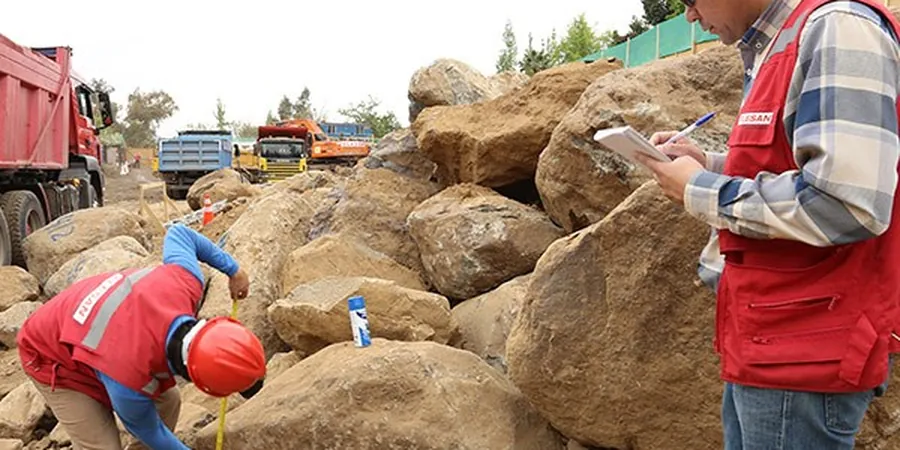
Technical details of the service in Gisborne
Local geotechnical conditions in Gisborne
NZS 1170.5:2004 places Gisborne in a high-seismicity zone where the combination of soft soil amplification and proximity to the Hikurangi subduction margin creates a design challenge that few other New Zealand cities face to the same degree. A soil mechanics study that neglects the cyclic degradation of pumice-rich silts—a material whose grain structure can crush under repeated shear—will underestimate post-earthquake settlement. The Poverty Bay flats also hold layers of highly compressible estuarine clay that continue to consolidate under fill loads, producing long-term differential movement that cracks stiff structures. In our experience, the most costly failures in the region stem not from ignoring the obvious but from misinterpreting the transitional boundary between the Wharekopae tephra and the underlying marine sands: two materials that look similar in a hand specimen but behave entirely differently when saturated and loaded. A careful laboratory programme, including oedometer and undrained triaxial testing, resolves that ambiguity before the footing is poured.
Our services
Every soil mechanics study we deliver in Gisborne is anchored on two complementary work packages that turn site investigation data into engineering parameters.
Advanced laboratory testing programme
We design test sequences—consolidated undrained triaxial, direct shear, oedometer, and Atterberg limits—that match the stratigraphy encountered in the field. Results are interpreted within the critical-state framework and reported with stress paths and stiffness degradation curves, giving the structural engineer the parameters needed for finite element or limit-equilibrium analysis.
Integrated in-situ and lab correlation
Field data from CPTu or SPT borings is cross-plotted against laboratory index properties to produce site-specific correlations for relative density, overconsolidation ratio, and undrained strength. This two-pronged approach reduces the uncertainty inherent in using global correlations on the region's highly variable volcaniclastic deposits.
Frequently asked questions
What does a soil mechanics study in Gisborne typically cost for a single-dwelling site?
For a standard residential lot in the Gisborne area, the combined field investigation, laboratory testing, and interpretive reporting usually falls between NZ$5.770 and NZ$9.560, depending on the number of boreholes and the complexity of the laboratory programme required to characterise the Poverty Bay soils.
How deep do you need to investigate for a soil mechanics study on the Gisborne flats?
The investigation depth is governed by the stress bulb of the proposed foundation and the depth to competent material. On the Poverty Bay flats, we commonly extend borings to 15–20 metres to capture the full sequence of alluvial sands, estuarine silts, and the underlying Pleistocene gravels, ensuring that compressible layers below the zone of immediate bearing influence are not overlooked.
Can a soil mechanics study help if my Gisborne site has already shown cracking in an existing structure?
Absolutely. A forensic soil mechanics study can differentiate between movement caused by expansive clay reactivity, consolidation settlement of underlying soft layers, or slope creep on hillside sites. We retrieve undisturbed samples and run swell pressure and oedometer tests to isolate the mechanism, which then informs the retrofit or underpinning strategy.