Gisborne sits at the edge of the Pacific, where the Waipaoa River has spent millennia depositing layers of sediment across the Poverty Bay flats. The city's 38,000 residents live atop a complex mix of alluvial silts, sands, and soft clays that can extend 30 metres or more before reaching competent bearing strata. For any structure taller than two storeys near the Taruheru or Waimata rivers, shallow footings rarely cut it. The ground here demands a deeper solution. Pile foundation design in this region must account for the dynamic interaction between loose near-surface deposits and the stiffer materials below, all while factoring in the seismic reality of the Hikurangi subduction zone just offshore. We combine local drilling experience with laboratory testing to develop pile configurations that transfer loads past the weak stuff and into the materials that can actually carry them.
A pile's capacity is only as reliable as the ground model it's designed from. In Gisborne's alluvial environment, skipping the site investigation means designing blind.
Technical details of the service in Gisborne
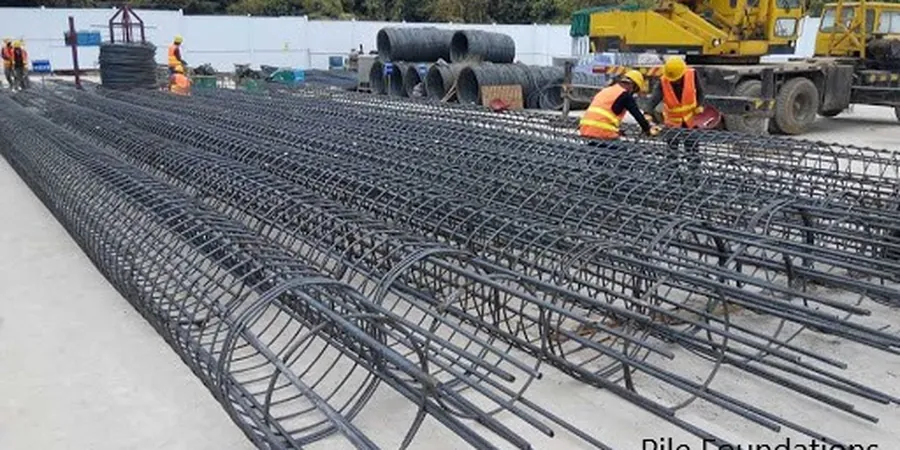
Local geotechnical conditions in Gisborne
A four-storey apartment block on the Kaiti side of the river ran into trouble during piling when the contractor encountered a buried layer of peat at 8 metres depth, completely missed by a sparse investigation. The piles, originally designed to bear in dense sand at 18 metres, had to be extended to 27 metres with significant cost and programme implications. That scenario plays out across Gisborne more often than it should. The soft, compressible organics that sit within the alluvial sequence act like a sponge under load, consolidating over years and dragging down pile-supported slabs if not properly accounted for. Our pile foundation design process models these layers explicitly, calculating negative skin friction contributions and specifying coatings or sleeving where needed. We also look at group effects, because closely spaced piles in soft clay can behave very differently from a single isolated element.
Our services
Our Gisborne pile design work covers the full scope from concept through to construction monitoring. Every project starts with a clear definition of the geotechnical context.
Axial Capacity Analysis
Static and dynamic analysis of pile capacity in compression and tension, using SPT and CPT data calibrated against local case histories in the Poverty Bay alluvium.
Lateral Load and Seismic Design
P-y curve modelling for lateral response under wind and earthquake, including liquefied soil scenarios per NZGS Module 4 guidelines.
Settlement and Group Effect Modelling
Elastic continuum and t-z methods to predict pile group settlement, accounting for the compressible layers common in the Gisborne flats.
Construction Phase Support
Review of piling records, dynamic testing coordination (PDA), and verification of as-built conditions against design assumptions.
Frequently asked questions
What geotechnical investigation is needed before pile foundation design in Gisborne?
At minimum, one deep borehole or CPT sounding per building footprint, extending at least 5 metres into competent strata. In Gisborne's variable alluvium, we typically recommend a grid of soundings to catch buried channels. Laboratory testing should include Atterberg limits, triaxial compression on undisturbed samples, and consolidation tests on any cohesive layers encountered.
How much does pile foundation design cost for a typical Gisborne project?
Design fees generally fall between NZ$2,670 and NZ$11,970 depending on the structure scale, number of piles, and complexity of the ground conditions. A single-storey residential extension on the flats will be at the lower end; a multi-storey commercial building near the river requiring seismic analysis and group effect modelling will be higher.
How do you account for liquefaction in pile design here?
We assess liquefaction susceptibility using SPT and CPT data processed through the NCEER methodology, then apply the NZGS guidelines for pile performance in laterally spreading ground. This typically involves designing piles to resist bending from spreading crust layers while maintaining axial capacity through the liquefied zone into non-liquefiable material below.
What pile type performs best in Gisborne's soil conditions?
It depends on the specific site, but continuous flight auger (CFA) piles are common in the CBD where vibration sensitivity and groundwater are concerns. Driven steel H-piles work well for lighter structures and can penetrate cobble layers. For high-capacity requirements in soft ground, bored cast-in-place piles with temporary casing through the upper alluvium provide reliable performance. More info.