The Poverty Bay flats and surrounding hills hide a complex geology of young alluvial silts, sands, and layered gravels from the Waipaoa River system. In areas near the CBD, groundwater is often encountered within 2 metres of the surface. These conditions make foundation decisions risky without direct subsurface data. Our SPT drilling provides reliable N-values across the city—from Kaiti Hill slopes down to the port industrial zone. It is the default site investigation method under NZS 3404 for quantifying soil consistency and relative density. We perform testing with automatic trip hammers calibrated to deliver 60% energy efficiency, ensuring every blow count report meets the NZGS guidelines for seismic design in the Gisborne region.
N-values alone don’t tell the full story—hammer energy correction and local geology context turn raw data into a design parameter.
Technical details of the service in Gisborne
Local geotechnical conditions in Gisborne
A five-storey mixed-use building planned on Gladstone Road encountered 8 metres of loose, saturated sand before hitting competent material. The geotechnical brief called for SPT testing at 1.5 m intervals. N-values below 4 dominated the upper 5 metres, triggering a mandatory liquefaction analysis per the MBIE/NZGS Module 4 framework. Without this test, a shallow footing design would have carried a settlement risk exceeding 50 mm under seismic load. The data forced a redesign to driven timber piles socketed into dense gravel at 11 m. In Gisborne, skipping SPT investigation in the Poverty Bay flats is a direct path to post-earthquake differential settlement claims. The cost of a single borehole is negligible next to the liability of uninformed foundation engineering.
Our services
We structure SPT campaigns to answer specific design questions, not just generate raw data. Each report includes corrected N-values, soil logs, and preliminary geotechnical parameters ready for your structural engineer.
Standard SPT Borehole
Single or multi-point investigation with hollow-stem auger to 30 m depth. Includes full NZGS soil logging, water level monitoring, and sample bagging for lab index testing.
SPT with Liquefaction Analysis
Combines field N-values with fines content and plasticity data to produce a site-specific liquefaction potential index (LPI) under the Gisborne seismic hazard spectrum.
Combined SPT-CPT Correlations
When stratigraphy is erratic, we run a parallel CPTu profile to calibrate SPT N60 against tip resistance and sleeve friction, refining soil behaviour type classification.
Frequently asked questions
How much does an SPT borehole cost in Gisborne?
A typical single borehole to 15 m depth with full NZGS logging and a factual report runs between NZ$930 and NZ$1,300 plus GST. Deeper holes, difficult access, or liquefaction analysis modules increase the scope and final cost. We provide fixed-price quotes after a site walkover.
What depth do you normally drill for an SPT in Gisborne?
Most residential and light commercial investigations go to 10–15 m. For multi-storey structures or when bedrock is deep—common in the Waipaoa floodplain—we extend to 20–30 m to capture the full soil column influencing settlement and seismic response.
How is the SPT N-value corrected for hammer energy?
We use an automatic trip hammer calibrated to 60% of theoretical free-fall energy. Raw N is converted to N60 directly. Further correction to N1(60) applies an overburden stress factor, as required by NZGS guidelines for liquefaction assessment and foundation design.
Can you do SPT testing on sloping sites like Kaiti Hill?
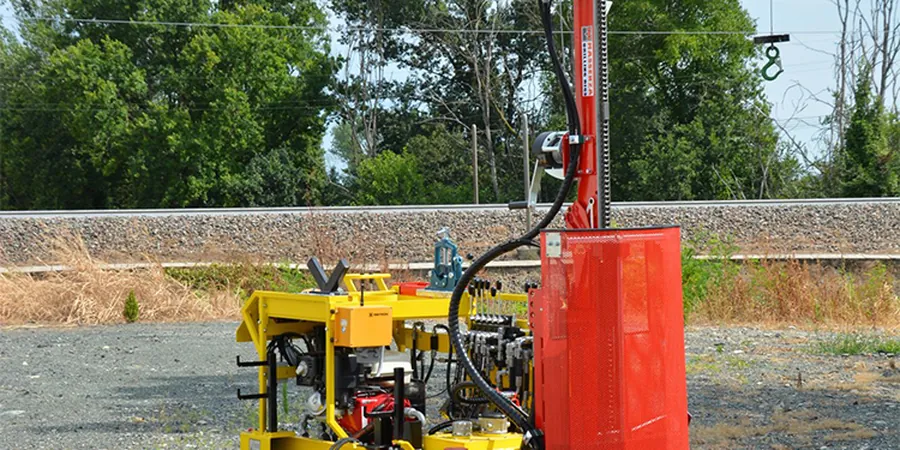
Yes. We operate a compact track-mounted rig that accesses slopes up to 30 degrees. On Kaiti Hill’s weathered siltstone and colluvium, SPT refusal often occurs above 5 m. We log the refusal depth and switch to rock coring if the design requires deeper bearing verification.
What is the difference between SPT and CPT for a Gisborne site?
SPT recovers a physical sample you can see, feel, and test for plasticity and gradation. CPT gives a continuous electronic profile without sampling. In Gisborne’s layered alluvium, most engineers request SPT for the first borehole to visually log the strata, then supplement with CPT for high-resolution profiling between holes.