Gisborne sits on young, soft sedimentary rocks and alluvial silts that erode fast in the region's 1000 mm average yearly rainfall. The Poverty Bay flats are underlain by Holocene marine and fluvial deposits that can hold high clay fractions, which makes moisture sensitivity a real construction concern. We run the Atterberg limits on samples taken from shallow and intermediate depths across the district to pin down the liquid limit, plastic limit, and plasticity index. These numbers feed directly into NZS 3404 classification and earthworks specification compliance. When subdivision earthworks kick off in areas like Wainui or the hills behind Kaiti, we often pair the limits with a grain-size analysis to build a full picture of the fine-grained fraction.
Plasticity index below 7% on Gisborne silts means low shrink-swell risk; above 20% on the hill clays means serious moisture control on site.
Technical details of the service in Gisborne
Demonstration video
Local geotechnical conditions in Gisborne
Gisborne's 38,000 residents live on a coastal plain where the water table sits high—often less than 2 metres below ground in the flat areas. Combine that with the region's history of major rain events like Cyclone Bola in 1988, and you get a soil profile that swings between saturated and dry within weeks. Atterberg limits testing catches the moisture content where the fine-grained soil changes from plastic to liquid behaviour. Miss that window, and you risk placing fill that turns to slurry after a heavy rain, or designing pavements that rut prematurely. The NZS 3404 standard ties earthworks compaction windows directly to the plastic limit, so skipping this test means you are running blind on moisture conditioning. For Gisborne's silty clay loams, the plastic limit often sits around 18-22%, and site water must be managed strictly around that number.
Our services
The Atterberg limits test is rarely the only data point needed. We combine it with complementary geotechnical services to give you a full profile of the Gisborne soil your project is dealing with.
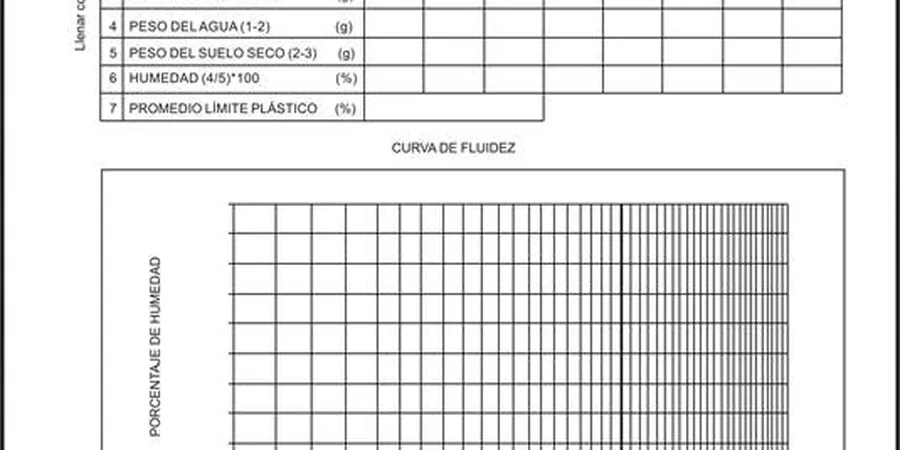
Liquid limit determination
Casagrande cup test on remoulded fine-grained soil to find the moisture content at the transition to liquid state.
Plastic limit measurement
Hand-rolling method to 3 mm thread, determining the lowest moisture content where the soil remains plastic.
Plasticity index reporting
Calculation of PI and correlation to USCS classification, shrink-swell potential, and earthworks suitability.
Combined index testing package
Atterberg limits plus particle size distribution, Proctor compaction, and sand cone density for full earthworks control.
Frequently asked questions
What do Atterberg limits tests cost in Gisborne?
Standard Atterberg limits testing on a single sample runs between NZ$100 and NZ$170. Batch pricing applies for larger projects with multiple samples.
How long does an Atterberg limits test take?
Standard turnaround is 3 to 5 working days from sample receipt. We can expedite to 24 hours for urgent earthworks decisions, subject to lab capacity.
What soil types in Gisborne need Atterberg limits testing?
Any fine-grained material—silts, clays, and silty clays—found across the Poverty Bay flats, Wainui subdivisions, and East Coast hill country. If the material passes the 425 µm sieve, the Atterberg test applies. Sandy gravels with less than 12% fines generally do not require it.